CMU Lunabotics
NASA's Lunabotics competition asks university teams to build a rover that can mine lunar regolith on its own. Ours drives itself across a simulated lunar surface, digs, hauls its load back, and dumps it, steering around rocks and craters the whole way, with no human in the loop. As a first-year team we managed to score core autonomy points, and were lucky enough to come away with an autonomy award.
An autonomous dig-and-dump cycle, start to finish.
The autonomy stack
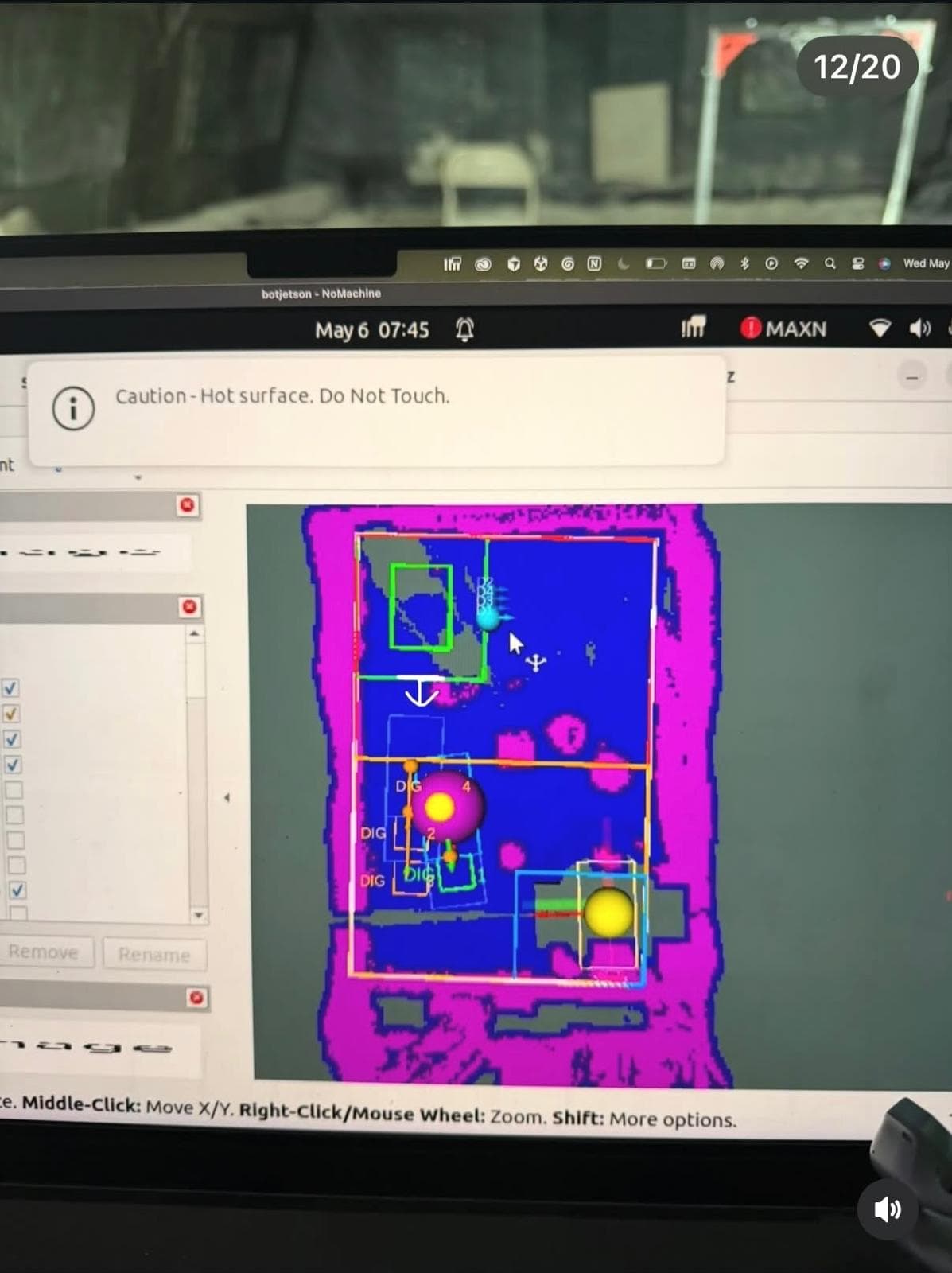
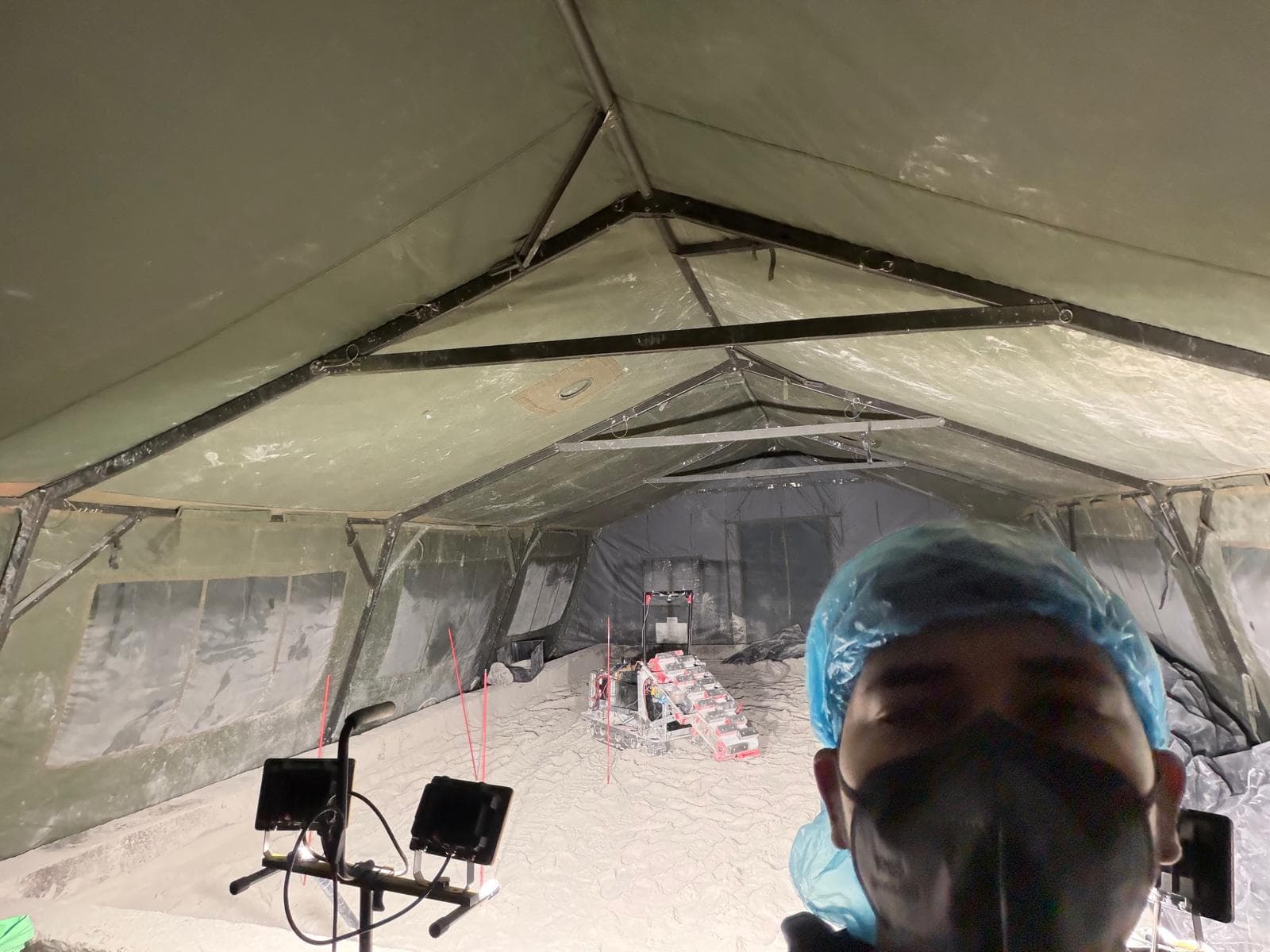
The rover plans a route with Hybrid A* and follows it with a GPU MPPI controller quick enough to replan as the terrain changes. LiDAR and a camera feed obstacle detection and the costmap, with segmentation running onboard a Jetson Orin. Digging and dumping runs as a state machine driven by what those sensors see. We put 100+ hours of field testing into it, mostly in a sandbox standing in for the lunar surface.
ROS2 / Nav2 · Hybrid A* + MPPI · YOLOv8 (PyTorch) · TensorRT / INT8 · LiDAR + camera fusion · Jetson Orin · Unity (synthetic data)
From the field